

Striking a Balance: Resident Doctors Vote Amid NHS Winter Crisis
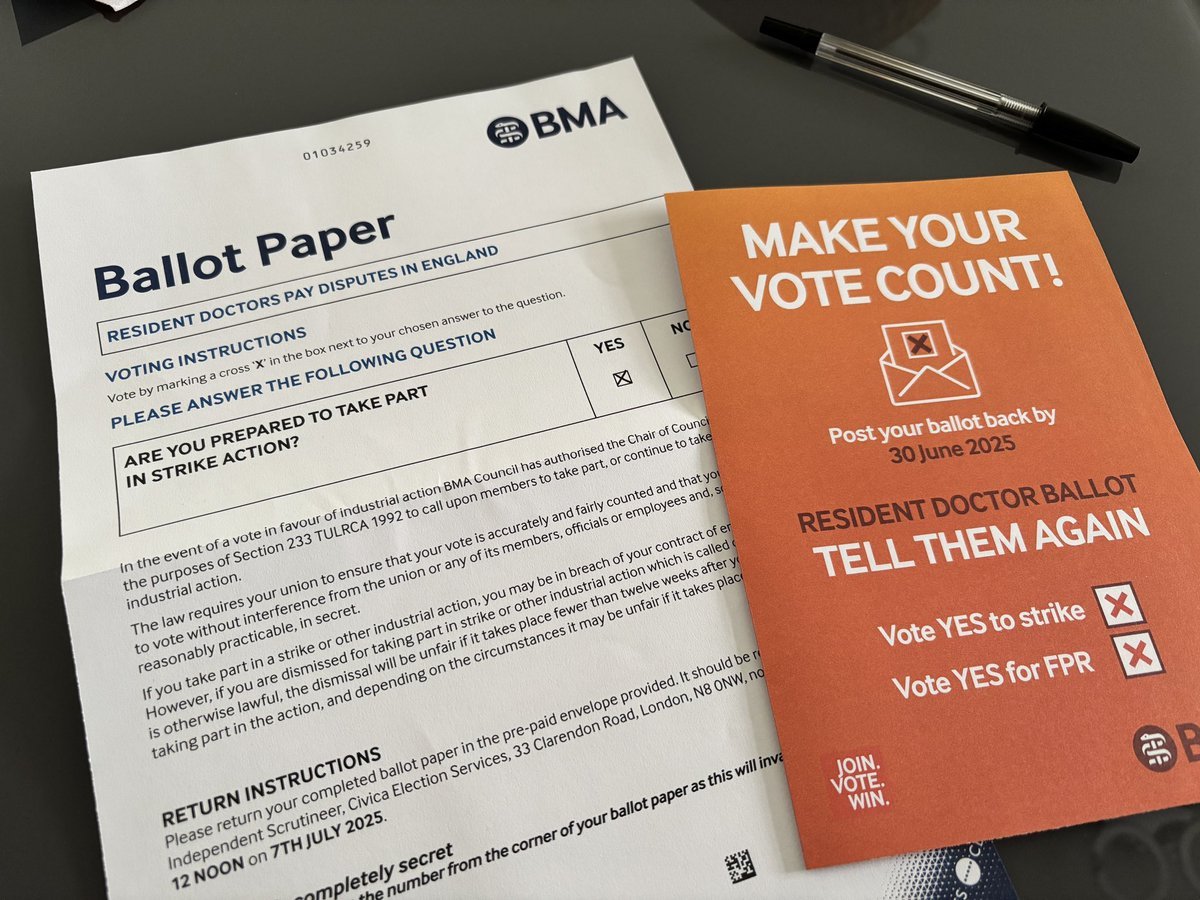
A new ballot, a familiar threat of strikes
Resident doctors are once again being asked whether they are prepared to take industrial action, as a fresh ballot opens following stalled negotiations with the government. The vote comes at a difficult moment for the NHS, with services under intense pressure and sustained media attention on overcrowded hospitals and corridor care.
While earlier walkouts were driven largely by pay, many doctors now say the heart of the dispute has shifted. For them, the central issue is no longer salary alone, but whether there are jobs and training places available once foundation training ends.
Pay: the dispute that started it all
Pay was the original spark for strikes. For more than a decade, resident doctors’ salaries failed to keep pace with inflation, leaving many worse off in real terms, according to the British Medical Association.
After prolonged industrial action, the government agreed to a series of pay rises. Over the past three years, resident doctors have received increases totalling 28.9 percent. Ministers cite this figure as evidence that they have addressed pay concerns.
The BMA accepts that these rises represent progress, but argues they do not fully undo years of erosion or resolve wider problems around morale and retention.
What an FY1 and FY2 now earn
A newly qualified Foundation Year 1 doctor now earns a basic salary just under £39,000. However, averages are higher once additional payments for nights, weekends, and on-call work are included.
According to the Nuffield Trust 2025 update, the average FY1 earns £46,000 a year, and the average FY2 earns £54,000 a year. More senior resident doctors in higher specialty training posts can see salaries rise to around £80,000, and with further progression before reaching consultant level, total pay can reach approximately £106,000.
Doctors note that these averages rely heavily on unsocial hours and on-call work, and that headline figures often obscure the reality of rota intensity, exam fees, and living costs, particularly in high-cost areas. The trajectory shows a steep rise with seniority, but progression depends on securing a training post, which is the central issue of the current dispute.
The Foundation Programme: your first job as a doctor
The Foundation Programme is the first stage of postgraduate medical training in the UK. It lasts two years and begins immediately after finishing medical school. For most doctors, it is their first paid job as a doctor.
During these two years, doctors usually complete six four-month rotations across a range of specialties, such as general medicine, surgery, emergency medicine, and psychiatry. The aim is to build broad clinical experience under supervision.
Completion of the first year, F1, allows full registration with the General Medical Council. Completion of the second year, F2, is required to apply for most specialty training posts.
The growing bottleneck after foundation training
Once foundation training is completed, doctors must secure a specialty training post to progress towards becoming a GP or consultant. This is where many now find themselves stuck.
In recent recruitment rounds, competition ratios have reached around four applicants for every available training post. Thousands of doctors complete UK medical school and foundation training each year without any guarantee of progression.
A system that does not prioritise its own graduates
The UK is relatively unusual in that it does not routinely prioritise its own domestically trained doctors for postgraduate training. In many comparable healthcare systems, training places are first allocated to doctors trained within that country.
In the UK, UK-trained doctors enter an open competition for a limited number of posts. This has left many newly qualified doctors without jobs or training positions, despite completing all required UK education and initial training.
What we mean by IMGs
International medical graduates, or IMGs, are doctors who obtained their primary medical qualification outside the UK.
IMGs make up a large proportion of the NHS workforce and are essential to service delivery. However, the failure to prioritise UK-trained doctors has created a system in which graduates of UK medical schools can be left unemployed or underemployed, forced to search for work abroad or remain in non-training roles for years.
Unemployment, emigration and stalled careers
For some UK-trained doctors, the lack of training posts translates into periods of unemployment after foundation training. Others rely on short-term service jobs that delay career progression and offer little security.
Many choose to leave the UK altogether, moving to countries where training pathways are clearer and progression more predictable. Others leave medicine entirely.
The December 2025 offer on training posts
The government’s latest offer, circulated ahead of planned December 2025 strikes, focuses heavily on training and jobs.
Under the proposal, the number of additional specialty training posts would increase from 1,000 to 4,000, with 1,000 created immediately. Ministers say this would reduce competition ratios from around four applicants per post to fewer than two.
A new recruitment round would also open in the spring, allowing doctors to apply for posts starting in August 2026.
Central to the offer is emergency legislation to prioritise UK medical graduates for specialty training from 2026. The government says legal barriers, rather than political opposition, have delayed this change until now.
Costs, fees and support for doctors with families
The offer also includes measures to reduce out-of-pocket costs. Mandatory Royal College membership fees, portfolio costs, and exam fees would be covered, with exam fees backdated to April for doctors who have already paid.
Support for doctors working less than full time would increase, with the allowance rising by 50 percent to £1,500, benefiting many parents and carers.
Why pay has not moved this year
The government has been clear that the offer does not include a further pay rise this year. Ministers argue that recent increases demonstrate a commitment to fair pay and that the immediate priority must be fixing structural problems in training.
The BMA says pay remains a live issue, particularly as living costs continue to rise, but acknowledges that training capacity has become the dominant concern for many members.
A winter NHS under strain
The ballot comes as the NHS faces a severe winter period. A large flu wave has driven up admissions, with hospitals reporting sustained bed occupancy pressures. Media coverage has focused heavily on corridor care, with patients treated in hallways and long delays in emergency departments.
Against this backdrop, the Health Secretary has warned that further strikes would be particularly risky. He has said that, unlike previous rounds of industrial action, he could not guarantee that strikes this time would not cost lives, even with mitigation measures in place.
What happens next
Resident doctors must now decide whether to accept the offer and call off strikes, or continue industrial action in pursuit of firmer guarantees.
For students preparing for medical school interviews, this dispute offers a valuable case study. A strong answer would show awareness that workforce planning, training capacity, and patient safety are deeply connected. You might explain that doctors need fair pay and clear progression to remain in the NHS, while recognising the ethical tension posed by industrial action during periods of extreme system pressure.
Demonstrating that balance — between supporting the workforce and protecting patients — shows insight into the realities of modern healthcare and the complexity of decision-making in the NHS.
How to approach this topic in a medical school interview
If asked about the junior doctor strikes or NHS workforce issues in an interview, focus on demonstrating awareness, balance, and ethical reasoning. Begin by showing that you understand the problem is multi-layered: pay, working conditions, and training capacity are all connected, and each affects retention, morale, and patient care. You might briefly outline the Foundation Programme and explain that after two years of structured rotations, UK graduates must secure a specialty training post — a bottleneck that leaves some doctors underemployed or forced to work abroad.
Next, acknowledge the pressures on the NHS, especially during winter with flu waves and corridor care, and show that you can weigh workforce concerns against patient safety. Emphasise the ethical tension: doctors have a right to fair pay and career progression, but industrial action can have real consequences for patients. Finally, avoid taking a partisan stance; instead, demonstrate thoughtful reasoning by recognising the perspectives of doctors, patients, and policymakers, and by considering both short-term risks and long-term solutions for a sustainable healthcare workforce.
